


 Bigeasyseo
How to Optimize a Webpage for AI and Get Found by ChatGPT


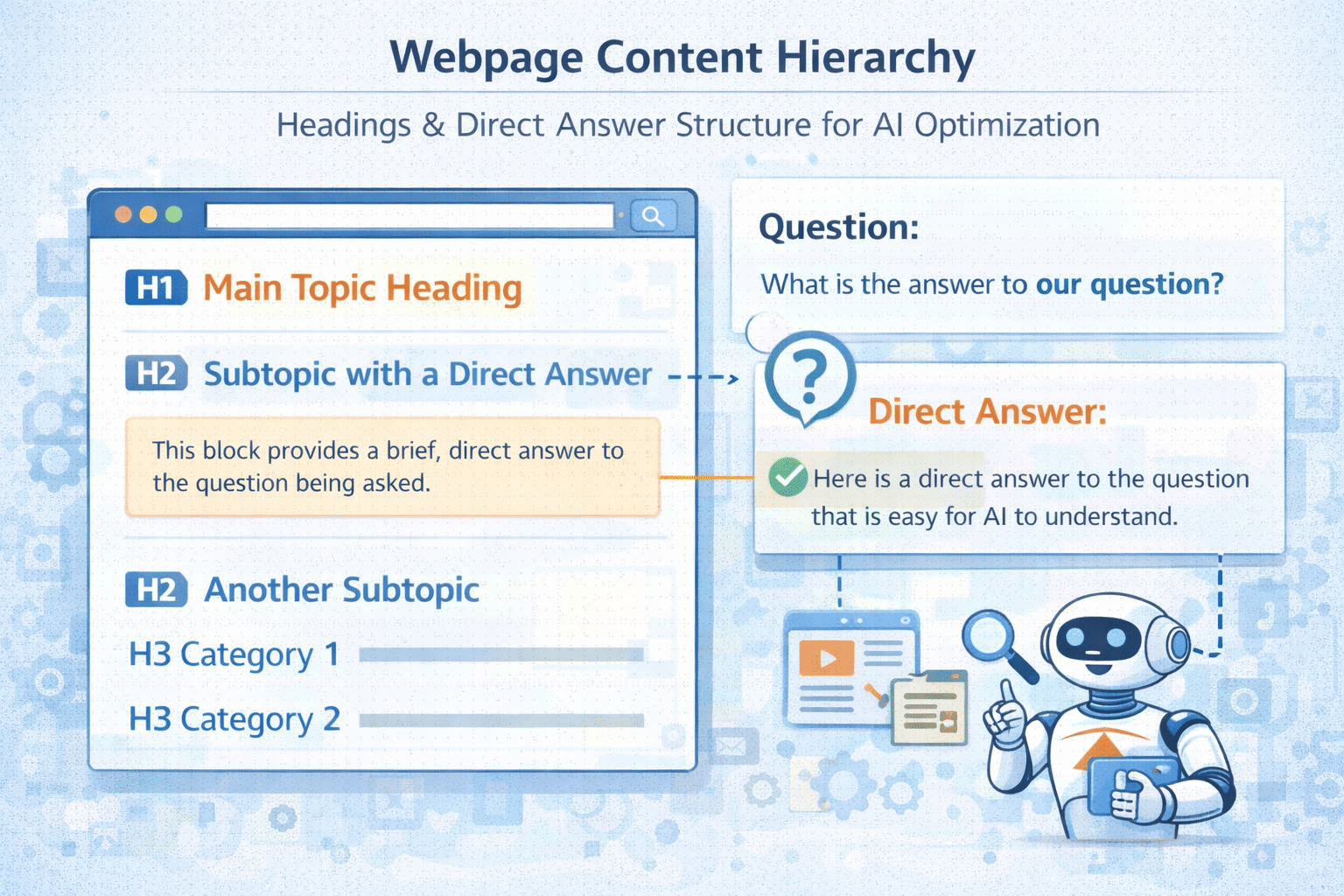
Optimizing a webpage for AI requires structuring content with direct answers, using natural language that mirrors how people ask questions, implementing schema markup, and organizing information in formats AI systems can easily extract and cite. These techniques improve visibility in ChatGPT, Perplexity, and similar AI-powered search tools.
Understanding AI Optimization and Why It Matters
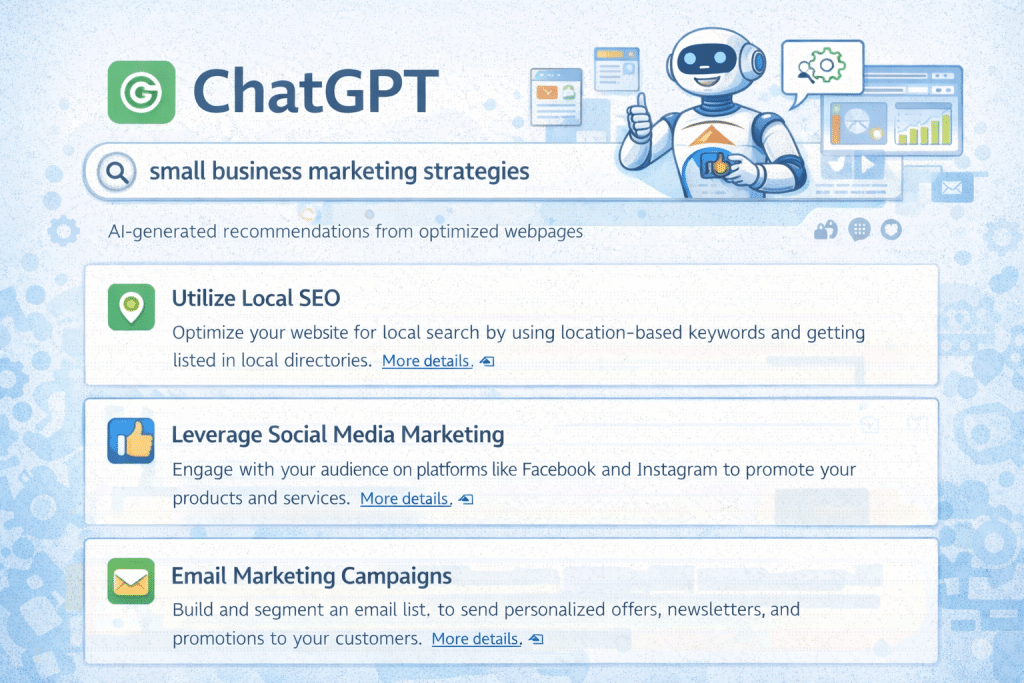
AI optimization focuses on making your webpage understandable and citeable by artificial intelligence systems like ChatGPT, Perplexity, Google’s SGE, and Bing Chat. Unlike traditional search engines that return a list of links, AI tools synthesize information from multiple sources and provide direct answers to user questions. Your business needs to appear in these AI-generated responses to stay competitive as more consumers rely on AI assistants for research and recommendations.
The fundamental difference between traditional SEO and AI optimization lies in how information gets consumed. Search engines show your page as a clickable result, while AI systems extract specific facts, quotes, and data points from your content to answer questions. This means your webpage must contain clearly structured, standalone answers that AI can identify, understand, and confidently cite.
Business owners across Louisiana, Texas, California, and beyond are discovering that AI visibility directly impacts customer acquisition. When someone asks ChatGPT for local service recommendations or business information, appearing in that response creates immediate trust and positions your brand as an authority. The transformation isn’t optional anymore; it’s how modern consumers discover businesses.
Write Content That Answers Questions Directly
Start each major section of your webpage with a concise 40-60 word answer that directly addresses a specific question. AI systems scan for these self-contained responses that provide value without requiring additional context. This approach makes your content “snippet-ready” and increases the likelihood that AI tools will extract and cite your information when users ask related questions.
Think about the questions your customers actually ask. Instead of writing about “Our Services,” create sections titled “What Does On-Page SEO Include?” or “How Long Does SEO Take to Show Results?” This question-based structure aligns perfectly with how people interact with AI assistants. When your headings mirror natural language queries, AI systems recognize your content as relevant answers.
Keep your direct answers factual and specific. Avoid marketing language in these opening paragraphs. Save your persuasive content for the elaboration that follows the initial answer. AI systems prioritize informative, objective content over promotional material when determining what information to include in responses.
Structure your sentences clearly with straightforward subject-verb-object patterns. Complex sentence structures confuse natural language processing algorithms. Simple, direct language helps AI understand your content accurately and increases the chances of proper attribution when your information gets cited.
Implement Schema Markup for Machine Readability
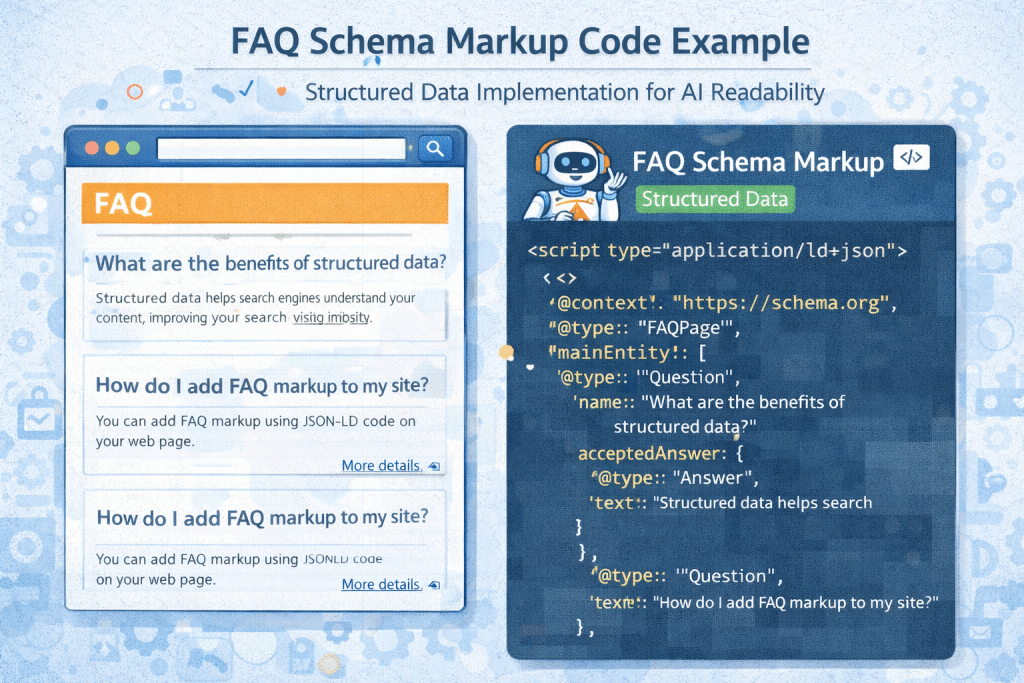
Schema markup provides structured data that tells AI systems exactly what your content means. This code helps artificial intelligence understand whether you’re describing a product, service, business location, review, or another entity type. While invisible to human visitors, schema markup dramatically improves how machines interpret your webpage.
Start with the FAQ schema for any question-and-answer content on your page. This markup explicitly labels questions and their corresponding answers, making it simple for AI to extract relevant information. LocalBusiness schema helps AI understand your service areas, contact information, and operating hours. If you offer services across Louisiana, Texas, California, Colorado, Mississippi, and Washington, schema ensures AI systems know your geographic coverage.
Article or BlogPosting schema works well for informational content. HowTo schema benefits step-by-step guides and tutorials. Product schema applies when you’re describing specific offerings with prices and features. The key is selecting the schema types that accurately represent your content’s purpose.
You don’t need to be a developer to implement schema. Tools like Google’s Structured Data Markup Helper guide you through the process. Once implemented, test your markup using Google’s Rich Results Test to verify that AI systems can read it correctly. Most content management systems also offer plugins that simplify schema implementation.
Ready to ensure your business appears in AI-powered search results? Big Easy SEO specializes in On-Page SEO strategies that optimize your webpages for both traditional search engines and emerging AI platforms. Call (504) 475-2049 to schedule your consultation.
Optimize Your Content Structure and Formatting
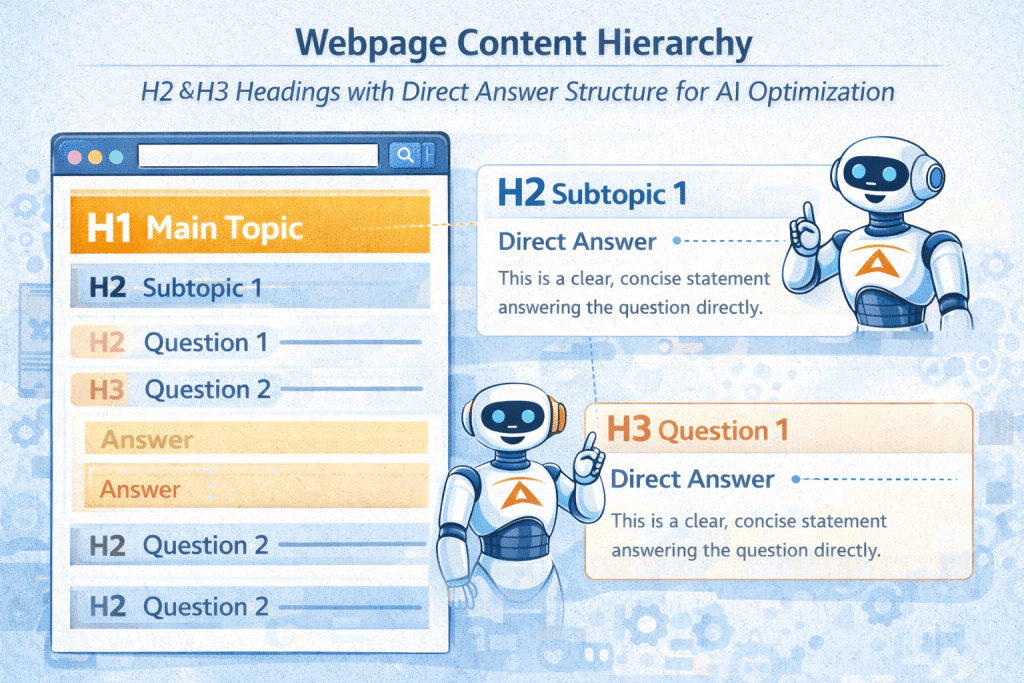
AI systems extract information more effectively from well-organized content. Use heading hierarchies (H2, H3, H4) consistently to establish clear relationships between topics. Each heading should describe the content that follows, helping AI understand your information architecture.
Break long paragraphs into digestible chunks of three to five sentences. White space improves readability for both humans and machines. When AI processes your content, clear paragraph breaks help algorithms identify where one concept ends and another begins.
Use lists strategically. Numbered lists work best for sequential steps or ranked items. Bullet points suit features, benefits, or non-sequential information. Tables excel at presenting comparisons or data sets. Each format serves a distinct purpose, and AI systems recognize these structural differences when extracting information.
Bold important terms and concepts sparingly. Overuse diminishes the signal, but strategic emphasis helps AI identify key entities and concepts within your content. Define technical terms the first time they appear, ensuring AI understands your vocabulary.
Build Entity-Rich, Semantically Connected Content
Entities are specific people, places, brands, or concepts that AI systems recognize and track. Writing entity-rich content means mentioning specific names rather than generic references. Instead of “SEO agencies,” write “Big Easy SEO.” Rather than “a city in Louisiana,” specify “New Orleans.”
Semantic connections link related concepts within your content. When discussing On-Page SEO, naturally incorporate related topics like meta descriptions, title tags, header optimization, and content quality. These semantic relationships help AI understand the full context of your expertise.
Maintain consistent terminology throughout your webpage. If you introduce a concept as “answer engine optimization,” don’t switch to “AEO” without first defining the acronym. AI systems track term consistency to assess content quality and accuracy.
Create content depth by covering topics comprehensively rather than superficially. AI systems favor authoritative sources that demonstrate expertise through detailed, nuanced explanations. Surface-level content gets overlooked in favor of resources that thoroughly address user questions.
Focus on Natural Language and Conversational Queries
People interact with AI using conversational language, not keyword-stuffed phrases. Optimize for how your customers actually speak. Someone might ask ChatGPT, “What’s the best way to improve my website’s search ranking?” rather than searching “improve website search ranking techniques.”
Long-tail, question-based phrases represent real user intent. Incorporate variations of common questions within your content. Address concerns, objections, and follow-up questions your audience typically has. This approach creates multiple opportunities for AI systems to match your content with user queries.
Voice search compatibility naturally follows conversational optimization. As more people use voice assistants connected to AI platforms, your content needs to match spoken language patterns. Write like you talk, keeping an 8th-grade reading level that remains accessible and clear.
Test your content by reading it aloud. If sentences feel awkward or unnatural when spoken, rewrite them. AI language models are trained on natural human communication, so content that sounds human-written performs better than overly formal or keyword-focused text.
Looking to make your business more visible in AI search results and traditional search engines? Big Easy SEO offers comprehensive On-Page SEO services designed to optimize your content for both human readers and artificial intelligence. Contact us at (504) 475-2049.
Maintain Content Accuracy and Freshness
AI systems prioritize accurate, up-to-date information. Regularly review and update your webpages to ensure facts, statistics, and recommendations remain current. Outdated information reduces your credibility with both AI and human audiences.
Cite sources for statistics and claims when appropriate. While you don’t need academic-level citations, attributing data to reputable sources strengthens your content’s authority. AI systems recognize and value properly sourced information.
Add publication and update dates to your content. These timestamps help AI determine information freshness. Content management systems can automatically display “Last Updated” dates, signaling to AI that your information stays current.
Monitor your industry for changes that affect your content. When best practices evolve or new information emerges, update your webpages accordingly. This ongoing maintenance positions your site as a reliable, current resource that AI systems can confidently reference.
Prioritize Page Speed and Technical Performance
AI crawlers, like traditional search bots, struggle with slow-loading pages. Site speed affects whether AI systems can efficiently access and process your content. Optimize images, minimize code, and leverage browser caching to improve load times.
Mobile optimization is non-negotiable. AI systems recognize that most users access content via mobile devices. Responsive design ensures your content remains accessible and readable regardless of screen size or device type.
Clean, valid HTML helps AI systems parse your content accurately. Broken code creates confusion for machine readers. Regular technical audits identify and fix issues that might prevent AI from properly understanding your webpage structure.
Secure your site with HTTPS. Security certificates build trust with both users and AI systems. Many platforms now prioritize secure sites when determining which sources to cite or recommend.
Create Unique, Valuable Content
AI systems detect and devalue duplicate content. Every webpage needs unique information that provides distinct value. Even when covering similar topics across multiple pages, approach each from a different angle or focus on specific subtopics.
Answer questions that competitors ignore. Identify gaps in existing content within your industry. When you provide information that’s hard to find elsewhere, AI systems recognize your content as a valuable, unique resource worth citing.
Demonstrate expertise through specific examples, case studies, and detailed explanations. Generic advice gets lost among thousands of similar pages. Specific, actionable guidance based on real experience stands out to AI algorithms trained to identify authoritative sources.
Balance comprehensiveness with conciseness. Provide thorough answers without unnecessary fluff. AI systems value content that respects the user’s time while delivering complete information.
Frequently Asked Questions About Optimizing a Webpage for AI
What’s the difference between traditional SEO and AI optimization?
Traditional SEO focuses on ranking your webpage in search engine results pages, while AI optimization ensures your content can be easily extracted and cited by AI systems like ChatGPT. AI optimization requires direct answers, natural language, and structured data that machines can confidently reference when responding to user questions.
How quickly can I see results from AI optimization?
AI optimization typically shows results within 4-8 weeks as AI systems crawl and index your updated content. However, visibility depends on content quality, technical implementation, and how frequently AI platforms refresh their knowledge bases. Consistent optimization efforts compound over time, steadily improving your AI visibility.
Do I need to hire a developer to implement schema markup?
Most business owners can implement basic schema markup using plugins or tools like Google’s Structured Data Markup Helper. However, complex schema implementations or custom solutions may benefit from professional assistance. Many SEO agencies, including Big Easy SEO, offer schema implementation as part of comprehensive optimization services.
Which AI platforms should I optimize for?
Focus on optimizing for all AI platforms simultaneously by following content best practices. ChatGPT, Perplexity, Google’s SGE, Bing Chat, and other AI systems share similar requirements: clear structure, direct answers, schema markup, and natural language. Quality optimization improves visibility across multiple platforms without platform-specific tactics.
Can AI optimization hurt my traditional search rankings?
No, AI optimization strategies actually strengthen traditional SEO. Direct answers, clear structure, schema markup, and quality content benefit both AI systems and search engines. The techniques complement each other, creating a comprehensive optimization approach that improves overall online visibility.
How often should I update my content for AI visibility?
Review and update cornerstone content quarterly, checking for outdated information, expired statistics, and industry changes. Add fresh content monthly to demonstrate ongoing expertise. Regular updates signal to AI systems that your site remains an active, reliable information source worth referencing.
What types of businesses benefit most from AI optimization?
Every business with an online presence benefits from AI optimization, but service-based businesses, local companies, and B2B organizations see particularly strong returns. When potential customers ask AI assistants for recommendations or information, appearing in those responses creates immediate credibility and drives qualified leads.