


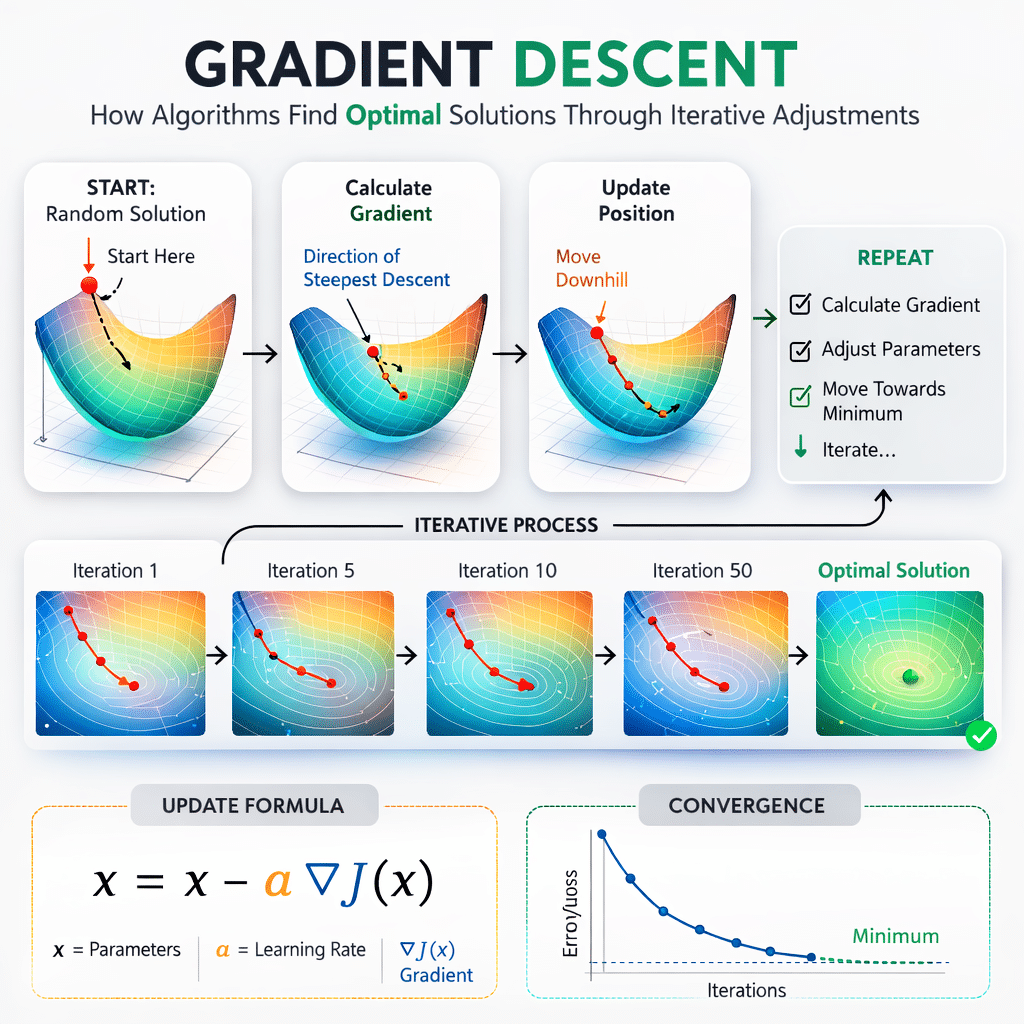
 Bigeasyseo
How AI Optimization Techniques Can Transform Your Online Business Presence


AI optimization techniques are mathematical methods that help computer systems learn and improve automatically. These same principles power search engines and recommendation systems, making them directly relevant to how your business appears online. Understanding these concepts helps you make smarter decisions about digital marketing investments.
Understanding AI Optimization Fundamentals
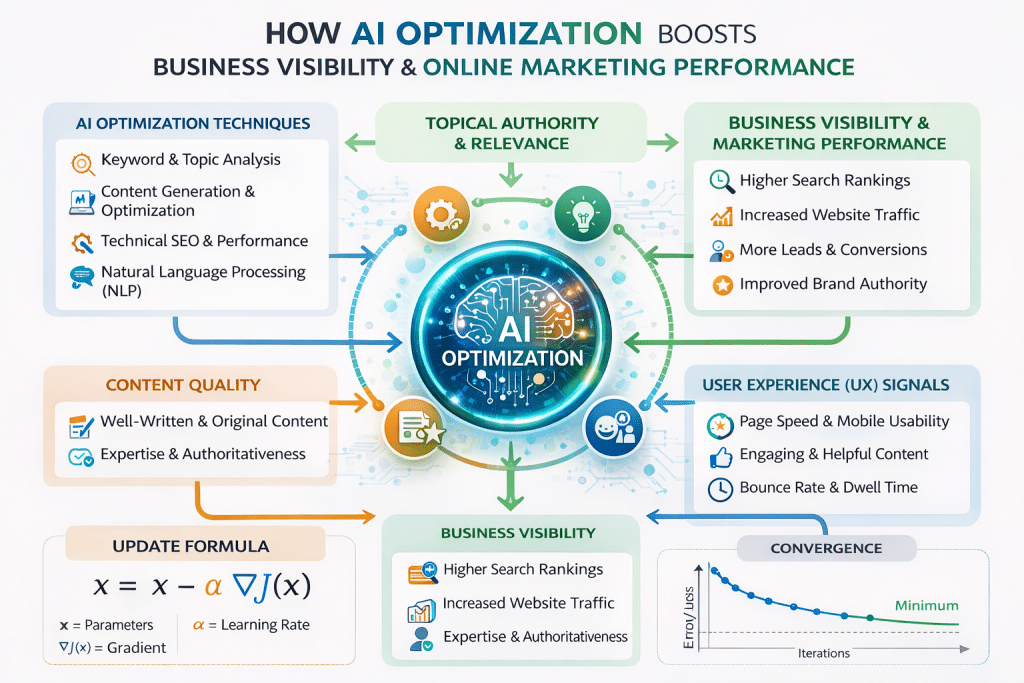
AI optimization techniques are systematic approaches that enable computer systems to find optimal solutions to complex problems by continuously adjusting and improving their performance. Think of these methods as training processes where software learns from data, identifies patterns, and makes increasingly accurate predictions. For business owners, these techniques directly influence how search engines evaluate websites, how advertising platforms target customers, and how recommendation algorithms connect products with buyers.
The connection to your online business presence runs deeper than most realize. Search engines like Google use AI to optimize results based on content quality, user intent, and website relevance. Social media platforms employ these techniques to determine which posts get visibility. Advertising networks optimize bidding strategies and audience targeting automatically. When you understand how these systems work, you gain insight into why certain digital marketing strategies succeed while others fail.
Core AI Optimization Methods Explained
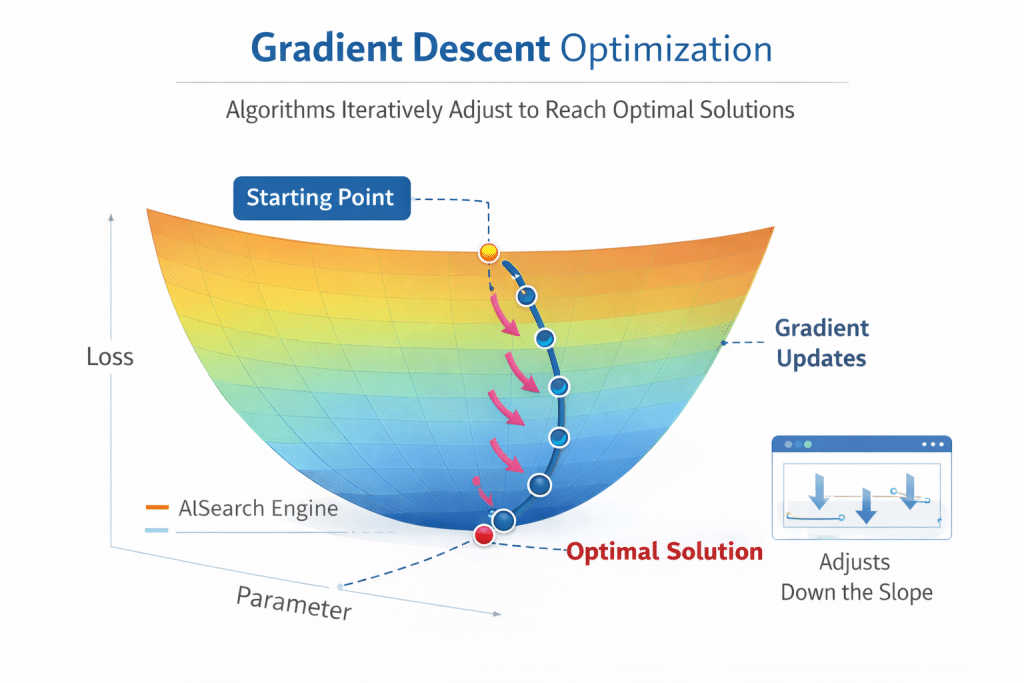
- Gradient descent represents the foundation of most AI optimization work. This technique works by making small adjustments in a specific direction to minimize errors, similar to walking downhill in fog by feeling which way slopes downward. Search algorithms use variations of this method to refine how they rank websites, constantly adjusting which factors matter most for different query types.
- Stochastic optimization introduces controlled randomness into the learning process, preventing systems from settling on mediocre solutions. This approach mirrors how effective digital marketing requires testing multiple strategies rather than committing entirely to a single approach. Platforms use these methods to balance immediate performance with long-term learning, which explains why advertising campaigns often improve significantly after running for several weeks.
- Evolutionary algorithms mimic natural selection by creating variations, testing them, and keeping what works best. Ad platforms employ these techniques when automatically generating headline combinations or testing image variations. The system creates multiple versions, measures performance, and progressively focuses resources on top performers while generating new variations to test.
- Bayesian optimization excels at finding solutions when testing is expensive or time-consuming. This method builds a model of which changes might produce the best results before actually trying them. Marketing automation platforms use Bayesian approaches to optimize email send times, content recommendations, and personalization strategies without requiring exhaustive testing of every possibility.
At Big Easy SEO, our on-page optimization strategies leverage an understanding of how these AI systems evaluate content, helping your website align with the technical factors that modern search algorithms prioritize. We translate complex AI concepts into practical improvements that boost your visibility. Call (504) 475-2049 to discuss how optimized content structure can improve your search performance.
How These Techniques Impact Search Rankings
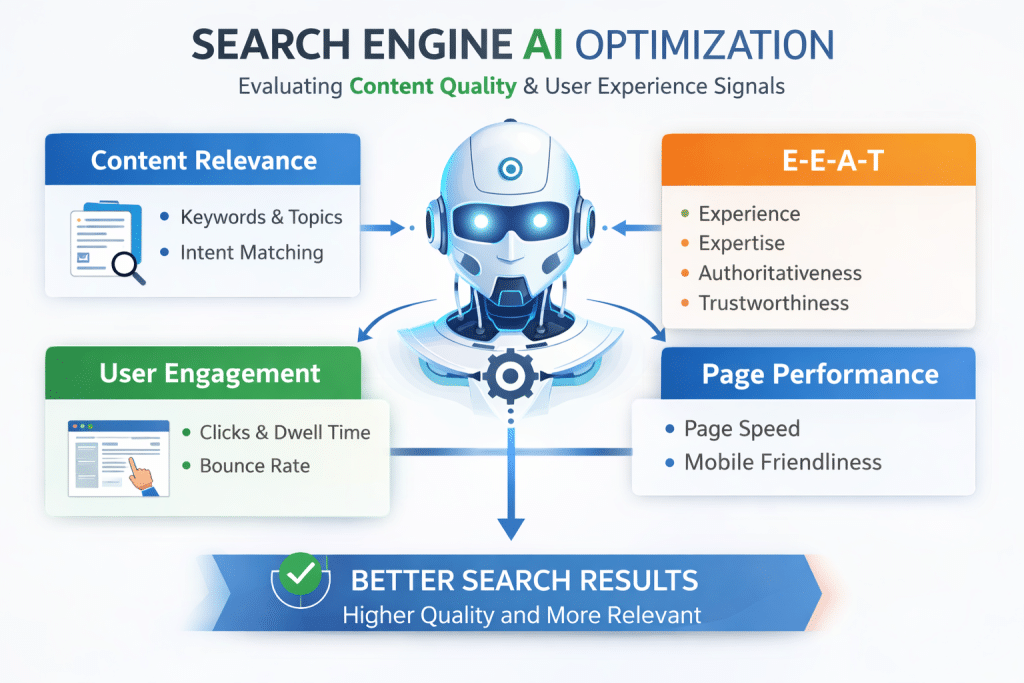
Search engines apply optimization algorithms continuously to improve result quality. Google’s RankBrain, for instance, uses machine learning to interpret search queries and evaluate which pages best satisfy user intent. The system optimizes its understanding by analyzing billions of user interactions, learning which content characteristics correlate with user satisfaction.
- Page experience signals get weighted through optimization processes that balance multiple factors. Core Web Vitals, mobile usability, and security indicators all feed into algorithms that determine how these elements should influence rankings for different query types. The optimization happens automatically as the system processes data about how users interact with search results.
- Content relevance assessment relies on natural language processing models trained through optimization techniques. These models learn to recognize topical authority, content depth, and semantic relationships between concepts. When you structure content to demonstrate expertise clearly, you align with what these optimized systems recognize as valuable.
- Link analysis algorithms use optimization to balance the quantity, quality, and relevance of backlinks. Rather than applying fixed rules, these systems continuously adjust how different link characteristics should be weighted. This dynamic optimization explains why link-building strategies must evolve as algorithms refine their understanding of what constitutes genuine authority.
Practical Applications for Business Visibility
Content recommendation systems on social platforms use optimization to maximize engagement metrics. These algorithms learn which content types generate shares, comments, and sustained attention. Understanding this helps explain why certain post formats consistently outperform others and why consistency matters for algorithm favorability.
- Advertising auction systems optimize in real-time to balance advertiser bids with predicted user response rates. The system learns which ads perform well for specific audience segments and adjusts delivery accordingly. This automated optimization means your ad performance data directly trains the system to find better prospects over time.
- Personalization engines optimize the user experience by learning individual preferences. E-commerce sites use these techniques to recommend products, while content platforms optimize which articles or videos to surface. For businesses, this means your content needs to clearly signal its relevance to specific audience segments so algorithms can match it with appropriate users.
- Conversion rate optimization tools apply AI techniques to identify which page elements most influence visitor actions. These systems test variations, measure results, and progressively implement changes that improve performance. The optimization happens automatically, but requires quality traffic data and clear conversion goals to work effectively.
Our team at Big Easy SEO implements on-page optimization strategies that account for how AI systems evaluate and categorize content, ensuring your website communicates its value proposition in ways both users and algorithms understand clearly. Contact us at (504) 475-2049 to learn how strategic content optimization improves your online visibility.
The Role of Training Data Quality
AI optimization techniques perform only as well as the data they learn from. Search algorithms trained on billions of user interactions develop a sophisticated understanding of quality content. This explains why established websites with substantial user engagement data often maintain ranking advantages.
- User behavior signals provide feedback that optimizes algorithm performance. Click-through rates, time on page, and navigation patterns all train systems to recognize which results satisfy user intent. Creating content that genuinely serves your audience generates positive signals that feed into these optimization loops.
- Structured data markup helps AI systems understand content context more accurately. When you implement schema markup, you provide explicit signals about content type, authorship, and relationships. This additional data helps optimization algorithms categorize and rank your content more effectively.
Avoiding Common Optimization Pitfalls
- Over-optimization occurs when techniques designed to manipulate rankings contradict genuine user value. Search algorithms now optimize specifically to detect and devalue such attempts. The systems learn patterns associated with manipulative practices and adjust rankings accordingly.
- Ignoring mobile experience conflicts with how modern algorithms optimize for user preferences. With mobile searches dominating most industries, optimization systems heavily weigh mobile performance factors. Neglecting mobile optimization increasingly limits your visibility regardless of other strengths.
- Neglecting page speed works against multiple optimization systems. Search algorithms factor loading performance into rankings. Advertising platforms reduce your ad quality scores for slow landing pages. User behavior metrics decline with poor performance, creating negative feedback loops that optimization algorithms amplify.
Making AI Optimization Work for Your Business
Understanding these techniques helps you make informed decisions about digital marketing investments. When you recognize that algorithms continuously optimize based on user satisfaction, you understand why authentic value creation outperforms manipulation tactics.
- Content quality improvements align with how optimization algorithms evaluate authority and relevance. Comprehensive coverage of topics, clear structure, and genuine expertise all register as positive signals. These factors feed into optimization loops that can progressively improve your visibility.
- Technical performance optimization directly impacts how AI systems evaluate your website. Fast loading, mobile responsiveness, and secure connections all factor into algorithmic assessments. These technical foundations enable optimization systems to rank your content competitively.
- Consistent performance monitoring provides the data needed to understand how algorithmic changes affect your visibility. Tracking metrics over time reveals optimization patterns and helps identify which strategies generate sustainable improvements versus temporary fluctuations.
Frequently Asked Questions
How do AI optimization techniques differ from traditional programming?
Traditional programming follows explicit rules that developers write, while AI optimization techniques allow systems to learn patterns from data automatically. Rather than coding every scenario, developers create learning frameworks that optimize performance through exposure to examples. This approach enables systems to handle complexity and nuance that would be impractical to program manually.
Can small businesses benefit from understanding AI optimization?
Absolutely. Knowing how algorithms optimize helps small businesses allocate marketing budgets more effectively and avoid outdated tactics. You don’t need to become a data scientist, but understanding that search engines and ad platforms continuously learn from user behavior helps you focus on creating genuine value rather than chasing algorithmic loopholes that increasingly fail.
How often do search engine optimization algorithms update?
Search algorithms update constantly through continuous optimization processes, not just during major announced updates. The system analyzes user interactions in real-time and makes incremental adjustments automatically. Major algorithmic overhauls happen several times yearly, but the underlying optimization processes run continuously, which explains why rankings fluctuate even without announced changes.
What role does user behavior play in AI optimization?
User behavior provides the primary feedback mechanism that optimization algorithms learn from. When users click results, spend time reading content, and navigate to additional pages, these signals indicate satisfaction. Algorithms optimize to surface content that generates positive behavioral signals while demoting content associated with quick returns to search results or high bounce rates.
How can businesses optimize for AI-powered search algorithms?
Focus on comprehensive topic coverage, clear content structure, fast technical performance, and genuine user value. AI optimization systems learn to recognize quality through user behavior patterns, so content that satisfies search intent generates positive signals. Technical optimization ensures algorithms can efficiently crawl and understand your content, while structured data helps systems categorize it accurately.
Do AI optimization techniques make SEO more complex?
They change the nature of optimization from manipulating specific ranking factors to creating comprehensive user value. While the underlying systems are technically complex, the practical implications often simplify strategy: create authoritative content, ensure excellent technical performance, and build genuine audience relationships. These fundamentals align with how optimization algorithms learn to assess quality.
How does machine learning optimization affect local search results?
Local search algorithms optimize based on relevance, distance, and prominence signals while learning from user behavior patterns in specific geographic areas. The systems adapt to local search intent patterns, which explains why ranking factors may vary between locations. Consistent business information, customer reviews, and local engagement signals all feed into optimization processes that determine local visibility.