


 Bigeasyseo
What is AI Optimization and Why Does Your Business Need It?


AI optimization is the process of adapting your website content and structure to perform well with artificial intelligence-powered search engines. As Google and other platforms use machine learning to understand user intent and content quality, businesses must optimize for both traditional SEO factors and AI-driven ranking signals to maintain online visibility.
Understanding AI Optimization in Simple Terms
AI optimization refers to the practice of tailoring your website’s content, structure, and technical elements to perform well with artificial intelligence-powered search engines and answer platforms. Rather than focusing solely on keywords and backlinks, AI optimization considers how machine learning algorithms interpret content quality, user intent, and contextual relevance when determining which websites deserve top rankings.
Search engines like Google have moved far beyond simple keyword matching. Their algorithms now use natural language processing to understand the meaning behind search queries and the substance behind web content. When someone searches for information, these AI systems analyze thousands of signals to determine which pages will best satisfy that person’s actual needs, not just which pages mention the right words.
For business owners, this shift represents both a challenge and an opportunity. The old tactics of keyword stuffing and thin content no longer work. However, companies that focus on genuinely helpful, well-structured content often see better results than ever before. AI rewards websites that serve real human needs with clear, authoritative information.
How Search Engines Use Artificial Intelligence
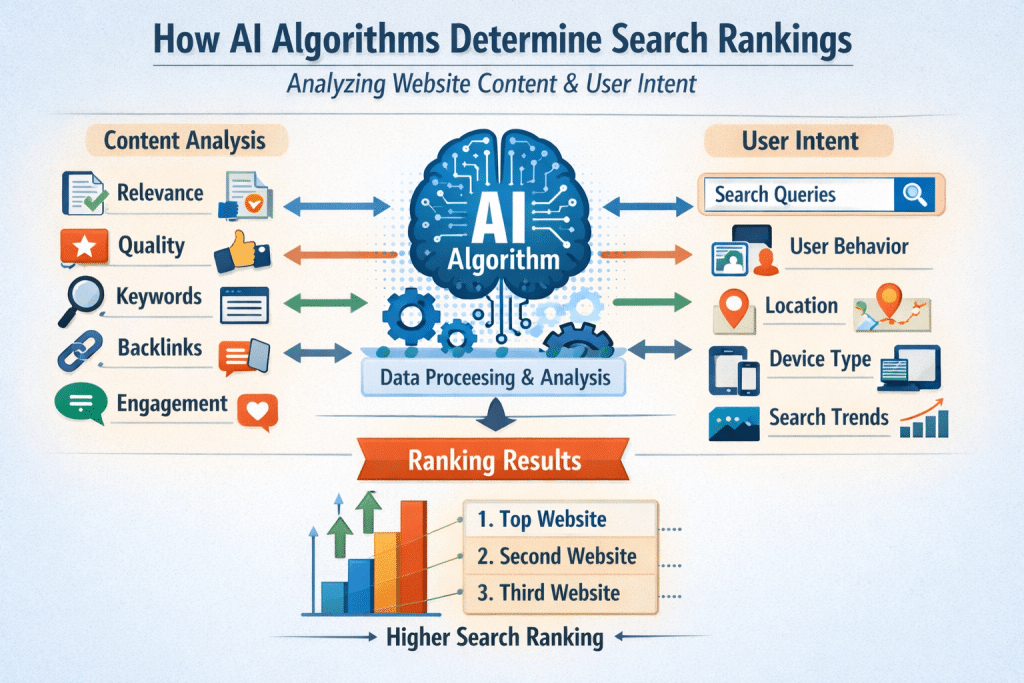
Google’s AI systems evaluate hundreds of ranking factors simultaneously, weighing everything from page load speed to content comprehensiveness. The most significant AI update, RankBrain, introduced machine learning that continuously improves at understanding search intent. This technology examines how users interact with search results and learns which types of content satisfy different query types.
BERT, another major AI system, analyzes the relationships between words in both searches and web content. This allows Google to understand nuanced questions and complex phrases that earlier algorithms would have found confusing. For example, the AI can distinguish between “how to train for a marathon” and “how to train your dog” based on context clues rather than just matching keywords.
More recently, Google’s MUM system can understand information across languages and formats, connecting concepts even when they’re described differently. This means your content needs to be conceptually thorough, not just keyword-complete. The AI looks for depth, accuracy, and whether you’ve covered related subtopics that complete the picture for readers.
These systems also extensively evaluate user experience signals. When visitors quickly leave your site to return to search results, the AI interprets this as a sign your content didn’t meet expectations. Conversely, when users spend time engaging with your pages, the algorithms boost your visibility for similar searches.
The Difference Between Traditional SEO and AI Optimization
Traditional SEO focused heavily on technical factors like exact-match keywords, meta tags, and the quantity of backlinks. While these elements still matter, AI optimization takes a broader view. The modern approach prioritizes understanding what users actually want to accomplish and delivering complete, satisfying answers.
Standard SEO practices treated search engines as systems to be gamed through formulaic approaches. AI optimization recognizes that machine learning constantly evolves to detect manipulation. Instead of trying to trick algorithms, successful businesses now align their content strategy with what the AI is designed to reward: genuinely useful information presented clearly.
The keyword strategy has evolved significantly. Rather than repeating exact phrases awkwardly throughout your text, AI optimization uses semantic keywords and natural language that cover topics comprehensively. Search engines now understand synonyms, related concepts, and contextual meaning, so your content should read naturally while covering subject matter thoroughly.
Link building remains important, but quality has completely overshadowed quantity. AI systems can identify link networks and manipulative patterns. What matters now is earning links from authoritative sources within your industry because those signals tell the AI that knowledgeable sources consider your content valuable.
If you’re looking to strengthen your website’s foundation while adapting to AI-powered search, Big Easy SEO‘s, On-Page SEO services can help optimize your content structure, technical elements, and user experience signals that machine learning algorithms prioritize. Call (504) 475-2049 to discuss your optimization strategy.
Key Elements of Effective AI Optimization
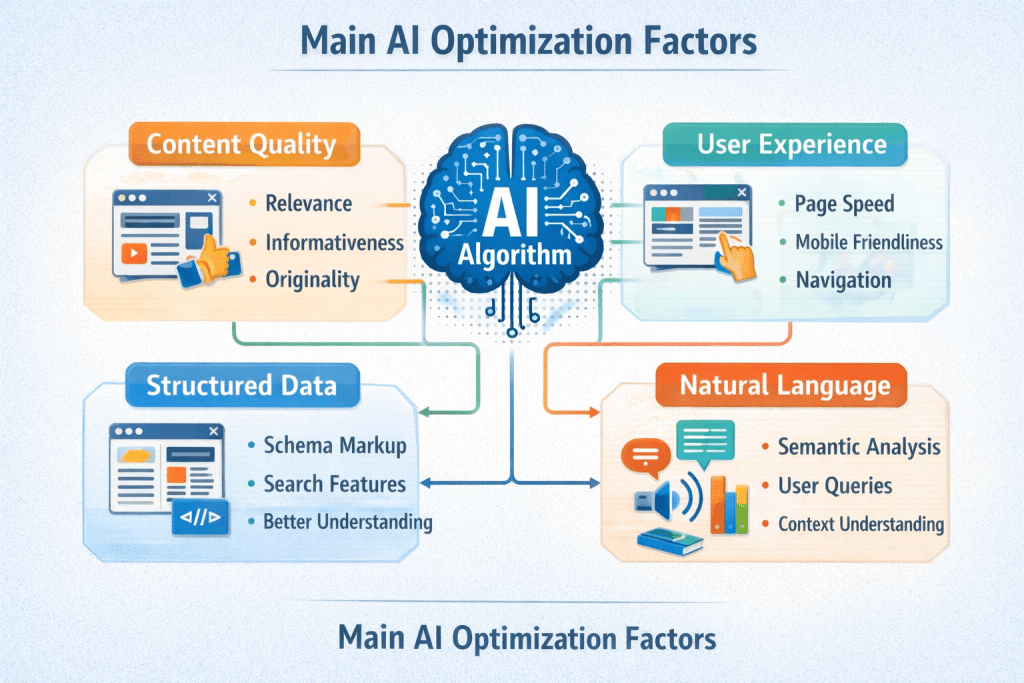
Content quality stands as the most important factor in AI optimization. Your pages need to demonstrate expertise, provide accurate information, and offer genuine value to readers. Thin content that barely addresses a topic will struggle regardless of other optimization efforts. The AI evaluates whether your content fully answers questions and provides the depth someone seeking information would need.
User experience directly impacts how AI systems rank your website. Page speed, mobile responsiveness, easy navigation, and clear visual hierarchy all contribute to whether the AI considers your site worthy of recommendations. These technical factors signal whether your business takes the user experience seriously.
Structured data helps AI systems understand your content’s organization and meaning. Schema markup tells search engines what type of information you’re providing, whether that’s a product, review, FAQ, or how-to guide. This allows the AI to feature your content in rich results and answer boxes, significantly increasing visibility.
Natural language and conversational tone have become increasingly important. As voice search grows and AI systems get better at understanding natural queries, content written in a clear, conversational style performs better. Your pages should answer questions the way a knowledgeable person would explain things in a conversation.
Topic clustering creates stronger topical authority in the eyes of AI algorithms. Rather than isolated pages targeting individual keywords, successful websites now build content hubs that thoroughly cover subjects from multiple angles. This approach signals to machine learning systems that your site is a comprehensive resource on specific topics.
Common AI Optimization Mistakes Business Owners Make
Many businesses continue using outdated tactics that AI systems now penalize. Keyword stuffing remains surprisingly common despite being counterproductive for years. When content reads unnaturally because someone forced keywords into every paragraph, both users and AI systems recognize the poor quality.
Neglecting mobile optimization represents a significant missed opportunity. With most searches happening on phones and AI systems prioritizing mobile-friendly sites, businesses without responsive designs lose substantial visibility. The algorithms interpret poor mobile experiences as a signal that your site doesn’t meet modern standards.
Thin content across many pages performs worse than comprehensive content on fewer pages. Some businesses create dozens of location-specific or slight-variation pages with minimal unique information on each. AI systems recognize these patterns and consolidate similar pages in rankings rather than showing them all separately.
Ignoring user intent leads to content that technically covers keywords but doesn’t satisfy what searchers actually need. For example, someone searching “best accounting software” wants comparisons and recommendations, not a definition of what accounting software is. AI systems reward pages that match the intent behind queries.
How AI Optimization Impacts Different Types of Businesses
Local businesses benefit tremendously from AI optimization because search engines use machine learning to match users with nearby services. Google’s local AI considers reviews, business information consistency, and how well your content addresses location-specific needs. A well-optimized local business can outrank larger competitors by demonstrating relevance to the immediate area.
Service-based businesses should focus on demonstrating expertise through detailed content. AI systems evaluate whether your website positions you as knowledgeable in your field. Comprehensive service pages, case studies, and educational content signal authority that machine learning algorithms reward with better visibility.
E-commerce sites need to optimize product descriptions, reviews, and category pages for AI interpretation. The algorithms examine whether your product information helps customers make informed decisions. Unique, detailed descriptions perform far better than manufacturer-provided copy that appears on multiple sites.
Ready to align your website with AI-powered search requirements? Big Easy SEO specializes in On-Page SEO optimization that addresses both traditional ranking factors and modern AI signals. Contact us at (504) 475-2049 to improve your online visibility.
Practical Steps to Start AI-Optimizing Your Website
- Begin by auditing your existing content for depth and usefulness. Read through your pages and honestly assess whether they fully answer questions or provide comprehensive information. Identify thin pages that need expansion or consolidation with related content to create more substantial resources.
- Improve your site structure to help AI systems understand content relationships. Clear navigation, internal linking between related topics, and logical categorization make it easier for algorithms to map your site’s expertise. Think of your website as a library where related books should be shelved near each other.
- Focus on answering specific questions thoroughly. Research what your target audience asks about your industry and create content that provides complete answers. This question-based approach aligns perfectly with how AI systems try to match content to user intent.
- Optimize technical elements that impact user experience. Run speed tests, ensure mobile responsiveness, fix broken links, and improve navigation. These factors directly influence how AI algorithms assess your site quality.
- Add structured data to help search engines understand your content better. Implement schema markup for your business information, services, FAQs, and articles. This allows AI systems to feature your content more prominently in search results.
- Monitor user engagement metrics to see how visitors interact with your content. High bounce rates or short time-on-page measurements indicate your content isn’t meeting needs, which AI systems will eventually recognize through behavioral signals.

Frequently Asked Questions About AI Optimization
What does AI optimization cost for a small business?
AI optimization doesn’t require additional budget beyond standard SEO services. The costs involve content creation, technical improvements, and ongoing optimization rather than specific AI tools. Most small businesses should expect to invest between $500-$2,000 monthly for professional optimization services that address AI-powered search requirements.
How long does it take to see results from AI optimization?
Most businesses notice improved rankings within 3-6 months of implementing AI optimization strategies. However, competitive industries may take longer, while local businesses often see faster results. The timeline depends on your current site quality, competition level, and how consistently you implement improvements.
Can I do AI optimization myself without hiring an agency?
Yes, business owners can implement basic AI optimization by focusing on quality content, user experience, and technical best practices. However, professional agencies bring expertise in structured data, advanced technical optimization, and content strategy that accelerate results. The decision depends on your time availability and technical knowledge.
Does AI optimization work differently for local businesses?
AI optimization for local businesses emphasizes location-specific content, consistent business information, and reviews. Google’s local AI algorithms prioritize businesses that demonstrate relevance to nearby searchers. While core principles remain the same, local businesses should focus more heavily on geographic signals and community connection.
Will voice search change how AI optimization works?
Voice search reinforces the importance of natural language and question-based content. As more people use voice assistants, AI systems increasingly prioritize conversational content that directly answers questions. Businesses should structure content to address specific queries in clear, complete sentences that work well as voice search results.
How often should I update content for AI optimization?
Update content whenever information changes or becomes outdated, typically reviewing important pages every 6-12 months. AI systems favor fresh, current information. However, constant minor changes aren’t necessary. Focus on meaningful updates that improve accuracy, add depth, or address new questions your audience asks.
What’s the most important AI optimization factor for rankings?
Content quality and relevance to user intent represent the most influential factors. While technical elements and user experience matter significantly, AI systems ultimately prioritize pages that thoroughly address what searchers need. No amount of technical optimization compensates for thin or irrelevant content.